
 Get self-health education, nutrition resources, and a FREE copy of A Terrible Ten: Health Foods That Ain't ebook.

Every spring, the same patients show up with the same complaints. Itchy eyes, runny nose, the whole familiar misery. And every spring, a lot of practitioners reach for the same category of solutions: something to calm the histamine, something to support the sinuses, something to get through the season. It works, sort of, until next year.
What Mark Anderson has been doing for decades is something different.
Not chasing the season, but asking why some people fall apart every March and others sail through unbothered, breathing the same air, walking through the same blooming fields. The answer, he’d argue, has nothing to do with pollen and everything to do with what was already true in the body before the first bud appeared on the tree.
That’s the real subject of the March 2024 webinar on seasonal allergies. Yes, it covers specific protocols. But underneath all of it is a three-part framework that, once you see it, starts showing up everywhere: in allergy season, in cardiac physiology, in the clinical case files of Dr. Royal Lee. Three fundamentals. One argument.
It goes like this.
The First Fundamental: The Terrain
3 Fundamentals of Seasonal Allergies — March 6, 2024
At the opening of the March 6, 2024 session, he says:
“Let’s start with perhaps the most misguided, misunderstood, and abused concept that underlies allergies in the broadest sense. And that is pH, the acid-base or acid-alkaline balance.”
He wasn’t being diplomatic. The alkalizing-the-body trend, still very much alive in natural health circles, is in his view a genuine hazard.
“You can really get your body in a lot of trouble just by following this advice.”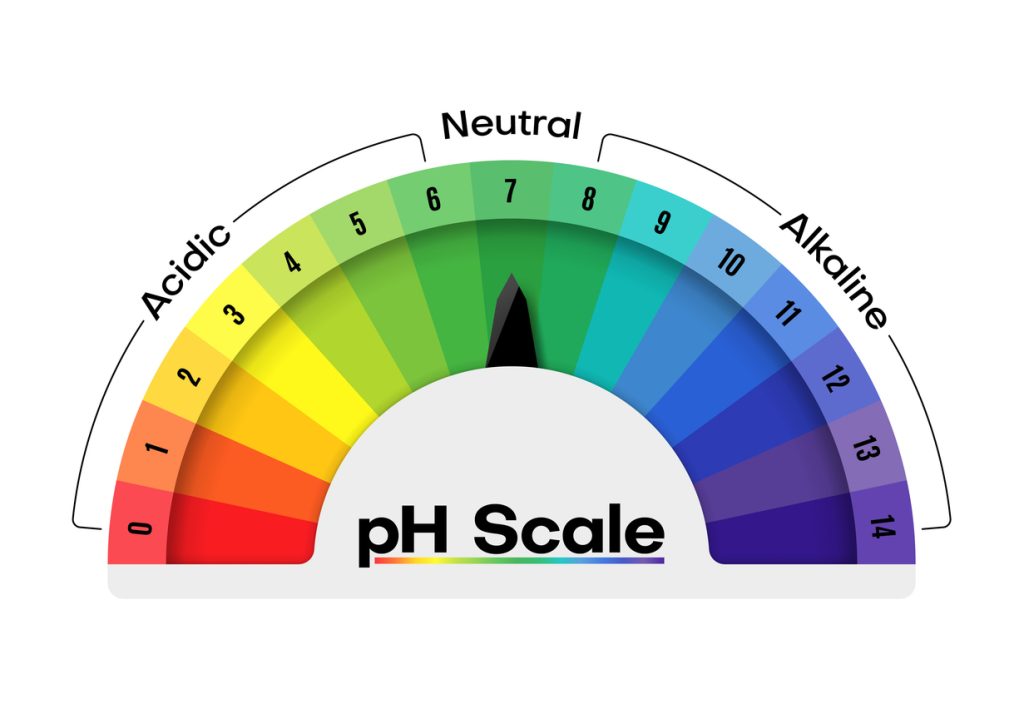
Not because alkaline foods are inherently dangerous but because forcing the body’s systemic pH upward runs directly counter to what the respiratory tissues actually need to function.
The evidence for this goes back further than most people realize. Standard Process developed Cal-Amo, calcium and ammonium chloride, as a nutritional acidifier based on work that predates most living practitioners’ careers. In March of 1916, the Journal of the American Medical Association published a report on the treatment of hay fever with calcium chloride.
Patients taking no less than three grams daily were “practically relieved of all hay fever symptoms,” in some cases “almost at once, or after taking at most only a few doses.”
That was over a hundred years ago. Well before the allergy supplement industry existed.
What makes this more than historical trivia is a 2021 paper from the International Journal of Molecular Science, which Anderson cited to show that normal airway surface liquid pH ranges between 5.6 and 6.7 in healthy tissue. Decidedly acidic. The nasal mucosa, the epithelial lining of the breathing apparatus, the tissues that pollen first encounters when you step outside on a spring morning: all of it is supposed to be acidic. That acidity is not incidental. It is the defense. Pollen struggles to gain purchase in an acid environment. Pathogens do too. When pH drifts alkaline, through poor diet, supplements marketed to raise pH, or seasonal stress, the mucosa loses that protection and the whole immune architecture of the airway goes reactive.
Anderson’s gloss on the 2021 paper was characteristically dry: “Way to go, fellas, to really be on top of things.” The science finally caught up to what Royal Lee was already formulating products around in the 1950s.
The terrain comes first. Everything else follows.
The Second Fundamental: The Expression
3 Fundamentals of Seasonal Allergies
Histamine gets a bad reputation, mostly undeserved. Every allergy sufferer knows the word, but very few understand what histamine is actually doing when it shows up.
“The way you know you have an allergy is because you develop histamine. It really is what produces all the symptoms.”
Histamine is the body’s announcement that the terrain has been breached and something foreign has gotten through. Suppressing it without addressing why the terrain failed is like pulling the battery out of a smoke detector and calling the house safe.
Royal Lee said as much in recordings that Anderson has played and referenced across multiple sessions. Lee’s position was that alkalinity in the tissues is the precondition for allergic reactivity, that a body with a properly acidic terrain simply doesn’t overreact the way allergic patients do. In his words:
“The patient only complains of allergies because he is alkaline. If he wasn’t alkaline, his allergy wouldn’t amount to anything.”
The practical corollary followed directly: normalize the saliva pH with a mineral acidifier, and antihistamines will work. But “all the antihistamines in the world won’t have much effect until you do.”
What makes this particularly striking is what Anderson found in the original Benadryl formula. Ammonium chloride was listed as the first ingredient, ahead of the diphenhydramine that everyone now thinks of as the active compound. The acidifier came first. At some point it was dropped, presumably for cost reasons. But Anderson noted that a current Indian generic version of diphenhydramine still includes ammonium chloride prominently on the label.
“They literally put that right there on the label. In other words, if I had to take a drugstore antihistamine, I’d rather take this one from India than the one from the US.”
The natural antihistamine in the Standard Process line, Antronex, rooted in Japanese research from the 1920s on a liver-derived factor they called Craton, is effective for the same reason and subject to the same condition.
“Don’t waste money on Antronex if you don’t take care to acidify with Cal-Amo.”
The two work in combination. Without the terrain correction, the histamine support is swimming upstream.
The Third Fundamental: The Nervous System
3 Fundamentals of Seasonal Allergies
This is the one that tends to get left out of the allergy conversation, and its absence probably explains a lot of the cases that don’t fully respond.
Once terrain is addressed and histamine support is in place, there is still the question of immune readiness, the body’s capacity to mount a coordinated response. Anderson locates this in the autonomic nervous system. In allergic states, the parasympathetic side tends to be dominant. What needs to happen is stimulation of the sympathetic, which governs the immune organs directly.
“The sympathetic nervous system stimulates all this immune regulation tissue, bone marrow, thymus, lymph, spleen, which makes the antibodies and the mucosa-associated lymphoid tissue of the gut and lung. These are all serious immune system stimulants that are under the control of the sympathetic nervous system.”
The nutrient is phosphorus. Standard Process built a phosphorus-bound formula on this principle as far back as 1931. Anderson is fond of demonstrating what free phosphorus actually does on contact with oxygen, which is to immediately burst into flame. “Phosphorus is how we make energy in the body,” he said. In its bound form cycling through adenosine triphosphate, it powers the very immune organs the body needs to stay ahead of an allergic cascade.
The sympathetic accelerates. The parasympathetic brakes. Allergic reactivity, in this framing, is less an inflammatory fire than a braking problem, a sluggishness in the organs built to respond. Phosphorus addresses that directly.
Three fundamentals. The terrain, the expression, the readiness. Three layers of the same problem, each one meaningless without the others.
When the Same Logic Appears in the Heart
The Most Asymptomatic Yet Perilously Predictive Heart Pattern — March 20, 2024
3 Vitamins That Don’t Exist But They’ll Kill You If You Don’t Eat Them — March 19, 2025
Here is where this teaching gets genuinely interesting, and where the Webinar Wednesday archive starts to feel less like a collection of individual topics and more like an ongoing conversation with a single thread running through it.

Two weeks after the allergy session, on March 20, 2024, Anderson presented what he titled “The Most Asymptomatic Yet Perilously Predictive Heart Pattern.” That pattern is a bundle branch block, what he calls the split sound on the heart sound recorder. A healthy heart produces a clean lub-dub. A bundle branch block produces lub-lub-dub, the left and right ventricles closing out of sequence, one side effectively giving the other CPR with each beat.
The Mayo Clinic notes that in most people the bundle branch block doesn’t cause symptoms. People carry it for years without knowing. What peer-reviewed cardiology research has documented is that it predicts new onset congestive heart failure and death from cardiovascular disease. Asymptomatic. Perilously predictive. Exactly as advertised.
The treatment Anderson describes is Cataplex® B-Core. The mechanism is nerve motor conductivity through vitamin B4, which is where the March 2025 webinar “Three Vitamins That Don’t Exist But They’ll Kill You If You Don’t Eat Them” becomes directly relevant.
Vitamin B4 does not appear on any accepted list of B vitamins. The sequence goes B1, B2, B3, then skips to B5. B4 is absent, as though it was never there. Anderson pointed out what Lee wrote in 1947:
“Probably the most important single factor in the B complex is the B4 fraction, otherwise known as the anti-paralysis vitamin. Heart disease is the commonest reaction, I believe, to B4 deficiency. The nerve innervation to the heart becomes partly paralyzed. The impulse becomes erratic. Extrasystoles are common, and ultimately fibrillation may develop.”
This was not fringe speculation. In 1932, Vera Reader at Oxford University published work in the Biochemical Journal on isolating vitamin B4 from yeast extracts and documenting paralysis in animals from whom it had been removed. A vitamin confirmed at Oxford in 1932 somehow didn’t make it onto the accepted list.
The clinical cases Anderson shared made the argument more concrete. Dr. Lowell Keppel documented a patient with classic atrial fibrillation, the sawtooth pattern on the heart sound recorder. Eight days on Cataplex® B-Core, and the fibrillation was gone. A normalized heartbeat where there had been chaos. Anderson showed his own recording of a forty-two-year-old woman with mitral regurgitation murmurs. Taken at 2:15, then again six minutes after administering Cataplex® B-Core:
“No mitral regurgitation. Six minutes later. So you tell me B4 doesn’t exist.”
The connection to the allergy framework runs deeper than shared subject matter. The nerve motor conductivity disrupted in the bundle branch block and the sympathetic nervous system activity governing immune response in allergic terrain are expressions of the same foundational physiology. The body doesn’t file these problems under separate departments. Nutritional deficiency shows up wherever the weakest tissue happens to be, and the only useful question is whether you’re looking upstream before the damage accumulates or downstream after it has.
What Clinical Pearls Keep Teaching
Clinical Pearls from Dr. Royal Lee — August 20, 2025
The August 2025 Clinical Pearls session is built differently from most Webinar Wednesday episodes. Rather than a single extended topic, it strings together short recordings of Dr. Lee speaking at various lectures and conventions across the decades, clinical observations delivered in rapid sequence with minimal connective tissue. It has the feel of sitting with someone who has been at this for a very long time and has stopped bothering with the preamble.
What the session reveals, heard alongside the allergy and cardiac webinars, is how consistently Lee was reading the same signals Anderson now teaches practitioners to read. A high salt craving, “It’s an indication that his adrenals are weak and need attention.” The body communicates with remarkable specificity when you know the physiology behind the signal. The salt craving is upstream communication from the adrenal cortex, which manufactures the aldosterone that regulates sodium retention. When that system is failing, the organism signals for the substrate it needs.
Or take Lee’s discussion of rancid oils and cancer, which he traces to a detail most people wouldn’t think twice about. Commercial whole grain products taste bad to many people because the wheat germ oil has gone rancid by the time the flour is milled, transported, packaged, and sold. Oncologists in the 1930s were documenting that they couldn’t clear certain cancers unless commercial cereal products were eliminated from the diet. Lee’s solution was what European village bakers had practiced for centuries without thinking about it: grind the flour and bake the bread the same morning. A freshness standard so old it had become invisible.
The Clinical Pearls format makes something visible that the single-topic sessions demonstrate more slowly: the body’s signals are legible, consistently so, if you know the physiology behind them. The skill Anderson has been developing in the Webinar Wednesday community over decades is exactly that: pattern recognition rooted in whole-food nutritional science, so that a split sound on a heart recorder or a salt craving or a seasonal allergic response isn’t just a problem to manage but information to track.
What Spring Is Actually Asking
The body has spent the winter under a different kind of stress: dry forced-air heat, reduced dietary variety, less sun, more indoor time. The immune system has been working, but not against the pollen load it’s about to receive. The autonomic nervous system has been running cooler. And then the trees bloom, the winds pick up, and every mucus membrane is suddenly doing its job under conditions that expose exactly where the terrain has drifted.
For the body whose pH is well-maintained, whose histamine regulation is supported, and whose sympathetic immune machinery is primed, spring is just spring. Muddy, beautiful, alive. For the body that went into the season already compromised on those three fronts, it’s a quarterly crisis.
Spring functions as a stress test. The pollen was always going to come. The allergic response, when it comes, is the body surfacing what was already true about its terrain before the first bud appeared. This is why treating the symptom every spring without addressing the underlying physiology produces the same patient every year.
Anderson’s three fundamentals, considered alongside the cardiac and clinical work that surrounds them in the archive, describe how a regulated body maintains itself under challenge. The mineral logic that protects the nasal epithelium in April governs cardiac nerve conductivity in June and adrenal function in December. The season just makes the gaps visible.
That’s what the Webinar Wednesday archive has been building toward across years of teaching: a way of seeing the body that makes the protocols make sense. Spring is a good time to start looking.
The Archive Is the Education
If you’re already a Webinar Wednesday subscriber, these sessions are searchable and waiting. The allergies webinar, the heart pattern session, the B vitamin deep dive — these aren’t one-time watches. Practitioners report coming back to them months or years later and catching things they missed the first time, because the teaching holds up and the clinical context keeps accumulating. If you haven’t searched the archive by topic or nutrient, that’s worth doing. There’s more there than any single post can cover.
If you’re not yet subscribed, this post is a fair sample of what the library contains, but only a sample. These four webinars alone represent ideas that took decades to develop and that remain largely absent from standard nutrition training. Mark Anderson has been teaching this material continuously, building on it, refining it, adding new clinical cases and primary source documentation with each session. That work doesn’t exist anywhere else in this form.
The archive is live and growing. Allergy season, as it happens, is an excellent reason to get into it. Start with spring. Stay for everything else.
Images from iStock/Photodjo (main), seamartini (acid alkaline), fizkes (woman on the computer).

