
 Get self-health education, nutrition resources, and a FREE copy of A Terrible Ten: Health Foods That Ain't ebook.
Sometimes I know a book is going to hit me a certain way before I read it, especially if I suspect the topic of veering close to home. I avoid parenting books because I don’t want to learn I’m a bad parent. I stopped reading Atomic Habits when I realized my own habits would never come close to “atomic.” Currently I’m reading Stolen Focus, but I feel a little too seen. “Stolen focus” accurately describes the last five years of my life. I’m only on chapter one, and I’m feeling pretty stressed out. Fantasy smut is just so much easier to burn through.
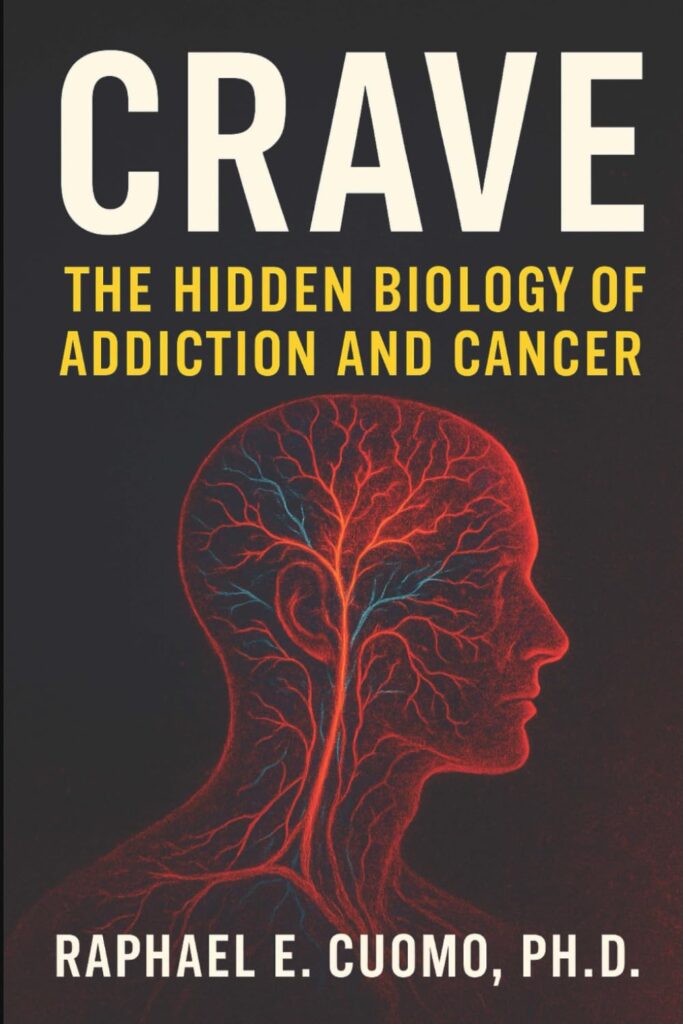
A few weeks ago it was suggested to me that I put down my fantasy smut and read Crave: The Hidden Biology of Addiction and Cancer, by Dr. Raphael E. Cuomo. Simply from the title, I understood that Crave would be one of these books. I would be seen, and I was right, of course. But the author helped me perceive a much bigger picture. In these pages I saw not just myself but also my family, and my friends, and the entire confounded society we’re living in. A society that is, as the author notes, saturated in addiction.

I’ll come back to how the author defines “addiction,” but first let’s talk about how most of us define it: addiction as a sign of moral weakness. This framing is so ingrained and so very familiar to us we can describe it in endless clichés. The mean drunk. The tragic junky. The fat slob. The zooted up executive (having a great day). My family is somewhat over-represented in this group. Smokers, snorters, drinkers, dopers, vapers, pill poppers, porn addicts, you name it. The whole enchilada.
And sure, we could chalk all of that up to a familial moral failing that goes back generations. But Dr. Cuomo offers a more nuanced perspective. With powerful storytelling and solid science, he reclaims addiction from the fringes of society and places it in the very heart of modern life. It is not about moral outrage but molecular scars. Not a personal failure but a biological force and societal affliction.
Dr. Cuomo makes this claim from the jump, right on page one. Addiction, he explains, is “a relentless cycle of stimulation and reward that defines ordinary life.” The emphasis is mine. With this definition, less than a single page into this book, the author gave me a new perspective of addiction. It had never occurred to me before, but I immediately knew it to be true. This vexing, trauma-inducing, generational whack-a-mole in my own family is also a biological fact of ordinary modern life.
Let me tell you about a YouTube short I came across whilst doomscrolling instead of sleeping the other night. It was of a little boy, six or seven, having an absolute meltdown over an iPad. Or I should say, over not having an iPad because his mother had taken it away for the afternoon. And then she filmed his tantrum for strangers on the Internet. You can hear the smile in her voice. She cajoles her son to play with his Legos, to go outside, to paint or work on a puzzle. In response he writhes on the ground as if in physical pain. “I want my iPad!” he screams. Throat raw, face red and stained with tears. Instead of seeing this for what it is—a symptom of withdrawal—the tries not to laugh. Because #shorts #ipads #kids #silly #funny
Imagine a child given so much access to an iPad that he or she can no longer find pleasure in actual child’s play. Imagine a parent with such intense brain rot that they think it’s fine to post such an awful scene for a droplet of digital dopamine. Imagine people in the comments calling the kid a brat or the mom a troll, and then leaving more comments for anyone who disagrees. That’s an addicted society, and the algorithm loves it.
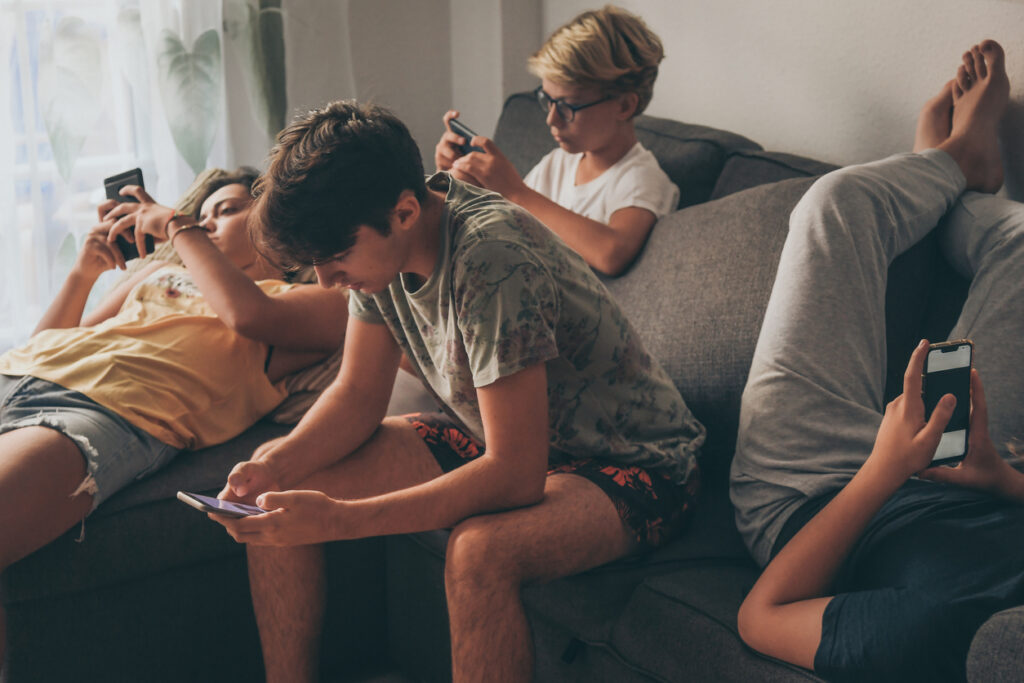
In the addicted society of today, some pretty unsettling behaviors have become normalized. All the doomscrolling, rage-baiting, phone checking, Twitch streaming, social media validating bullshit. Along with classics, of course—the coffee and alcohol, the sugar and cigarettes, the endless overworking, plus the heroin and stuff.
As any addict knows, you can pick your poison and have your fun, but there will always be consequences. However, a hangover is one thing. The molecular scars etched into our very biology is another. This is not fanciful or metaphorical. Dr. Cuomo cites the latest research from neuroscience, epidemiology, and behavioral science as evidence of molecular scarring. These scars show up as inflammation, dysregulated hormones, immune suppression and other measurable biological traces. Over time, too much sugar, too much work, too much screen time, too many rosé all day lunches, or any number of cravings and behaviors can increase the risk of a consequence nobody wants. Cancer.
Our cravings are not just central aspects of modern life. They are also proven, measurable factors of chronic illness and cancer. What this means is that our own human biology can turn a craving into an addiction and an addiction into a disease. Does this freak you out a little bit? Because I’m freaked out over here.
Dr. Cuomo offers hope, and for that I’m grateful. After all, the body wants to feel good, and plenty of small lifestyle shifts can lead to major changes. A dietary tweak. A technology break. Rhythm, rest, and relationships can shift our internal environment, reset reward pathways, and help us reclaim long‑term health. (Maybe we should make Rhythm, Rest, Relationships the new Live, Laugh, Love.)
I’ll be honest. I’ve tossed around the phrase “must-read” these past few years. Describing a book as a must-read is low-hanging fruit, and low-hanging fruit is tempting to pluck. But not all reads—even the good ones—are true must-reads. And fantasy smut—no matter how smutty—is rarely a must-read.
Now I’m in an awkward position. Crave is insightful and important. Dr. Cuomo has no trouble laying out scientific complex without dumbing them down. Chapter by chapter, he marshals powerful storytelling, empirical research, case studies, and real-world applications to illustrate the complex interrelationship between addiction and cancer as well as the biological landscape of both conditions. It is also that rarest of reads—lean, compact, no filler.
This gleaming little bullet of a book might just change the way you think about addiction and disease, health and prevention, and the mighty biology of the human body. Information and transformation. Here I go. Crave is a true must-read.
Images from iStock/ SeventyFour (man playing guitar), Fabio Principe (kids on phones), wildpixel (addictions).

