
 Get self-health education, nutrition resources, and a FREE copy of A Terrible Ten: Health Foods That Ain't ebook.

I work in information security. Most of my job is reading a confident claim and then checking what the evidence says. So when I kept running into the line that liver is “nature’s multivitamin,” I looked up the numbers.
What I found is useful for anyone who has tried liver once and decided never again. The amount that matters nutritionally is much smaller than the amount most of us picture on a plate. That turns a taste problem into a portion problem, and a portion problem is easy to solve in the kitchen.
How little it takes
The figures here come from USDA FoodData Central, compared with the Daily Values the FDA uses on food labels.
Braised beef liver has roughly 9,400 micrograms of vitamin A in 100 grams, against a Daily Value of 900. A full day’s worth fits in about 10 grams, which is a third of an ounce. A day’s vitamin B12 takes under 4 grams, and a day’s copper about 6.
A single ounce of cooked beef liver has around 54 calories and 8 grams of protein, with close to three days’ worth of vitamin A, about eight days’ worth of B12, and more than four days’ worth of copper. At that size it also gives you around 18 percent of the Daily Value for folate and 10 percent for iron.
So the traditional plate of liver and onions is not the entry fee. An ounce or two a week is a real contribution, and an ounce is small enough to hide.
Hide it in food you already like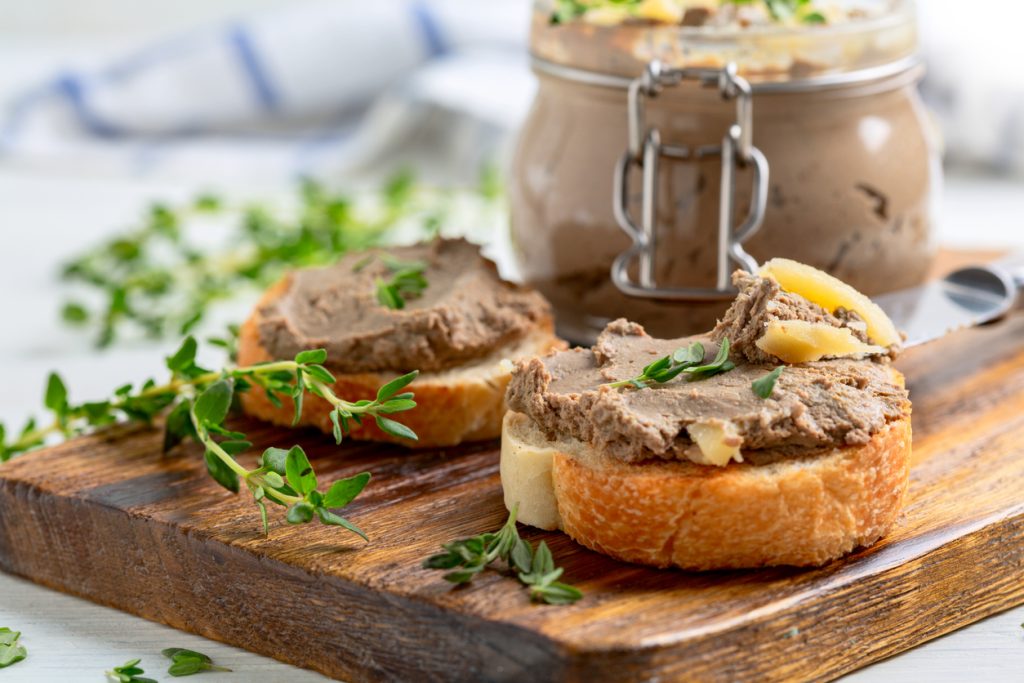
This is the simplest method, and it needs no special skill. Stir one ounce of finely chopped or ground liver into a pound of ground beef. In chili, meat sauce, meatballs, burgers, or taco filling, the seasoning and the beef carry the flavor. If that pound makes four servings, each one holds about a quarter ounce of liver, which works out to roughly three-quarters of a day’s vitamin A and about twice the day’s B12.
If you notice it, use less next time. If you don’t, you can stay there or move up to two ounces per pound. There is no prize for the largest amount you can tolerate.
Two habits make this easy to keep up:
- Portion and freeze. Cut fresh liver into one-ounce pieces, freeze them flat on a tray, then store them in a bag. One piece comes out with the ground beef.
- Grate it frozen. A frozen piece can be run over a coarse grater straight into the pan, which spreads it through the dish so no single bite tastes of it.
Kitchen steps cooks have long used
People were cooking organ meats long before nutrient tables existed, and the methods that have lasted are aimed at exactly the two complaints beginners have, the smell and the texture.
- Soak it first. Many cooks soak sliced liver in milk, or in water with a little lemon juice, for an hour or so before cooking, then pat it dry. It is a traditional step for a milder result.
- Cook it briefly. Recipes for sliced liver almost always call for a hot pan and a short cooking time. Long cooking is what gives it the dry, grainy texture people remember from childhood.
- Pair it with strong company. Onions, bacon, garlic, tomato, chili spices, mustard, and a splash of vinegar or lemon show up again and again in liver recipes for a reason.
- Blend it. Pâté, chopped liver, and liverwurst all work the same way: the liver is puréed with fat, onion and seasoning and eaten in small amounts on bread or crackers. For many people this is the most approachable form.
Start with the mild ones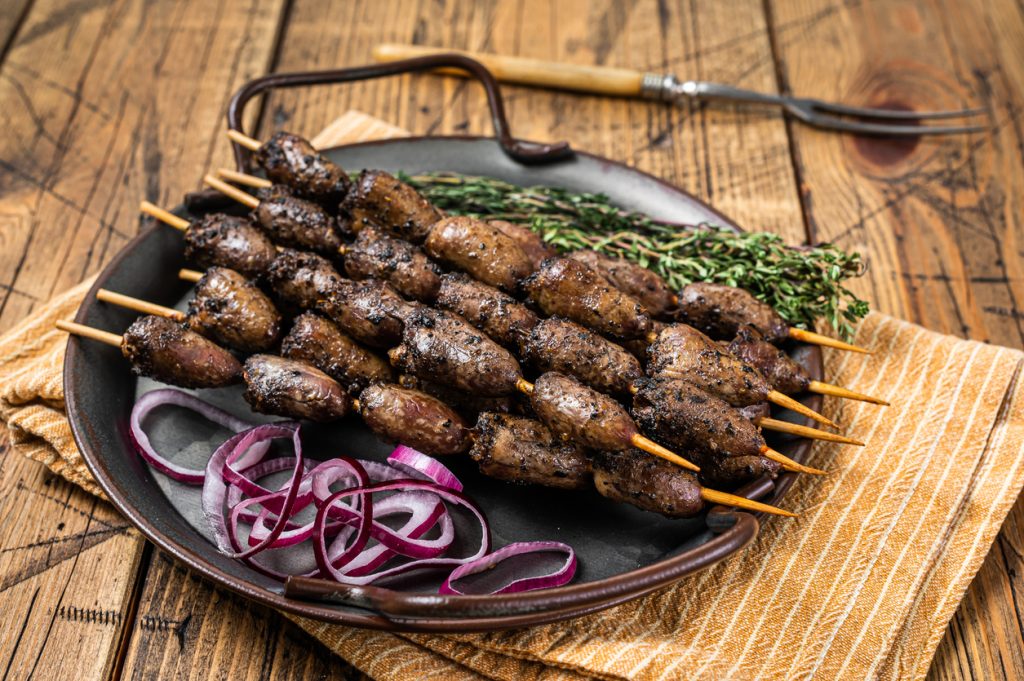
Not every organ tastes like beef liver, and you don’t have to begin with the strongest.
Beef heart is the easiest. It is a muscle, and it cooks and eats much like lean beef. It can be ground into burger meat or sliced thin and grilled, as in Peruvian anticuchos. Three ounces gives you about 9 micrograms of B12 and 5.4 milligrams of iron.
Chicken liver is generally considered milder than beef liver, and it is the base of classic dishes such as chicken liver pâté and Louisiana dirty rice. Per ounce it has less than half the vitamin A of beef liver and more folate.
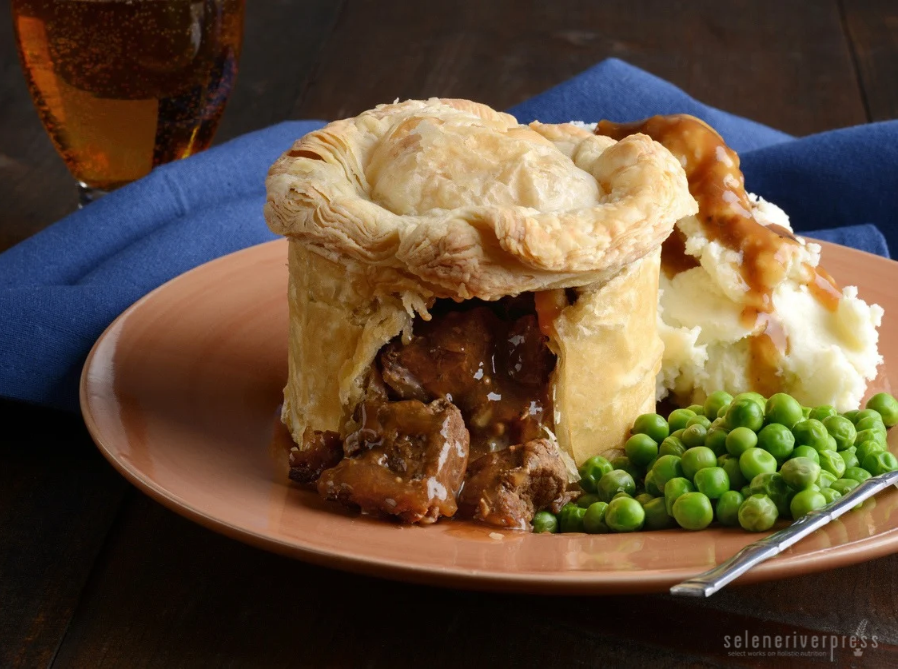
Beef kidney has a stronger character and usually appears in long-simmered dishes such as steak and kidney pie. Its numbers are worth knowing all the same: three ounces has around 143 micrograms of selenium, more than two and a half times the Daily Value, plus about 21 micrograms of B12.
What liver doesn’t cover
One correction to the “multivitamin” line, since I went looking. Liver is rich in a specific group of nutrients: vitamin A, B12, copper, riboflavin, and folate. It has very little of some others. A 3-ounce portion has about 5 milligrams of calcium against a Daily Value of 1,300, under 2 milligrams of vitamin C, and no fiber. It belongs beside the vegetables and the other whole foods on the plate. It does not replace them.
What I’d tell a beginner
Start with the smallest amount that matters. Buy a little, cut it into one-ounce pieces, freeze them, and fold one into something you already cook each week. Small and regular works better than large and occasional, and it is a lot easier to keep doing. If you are pregnant or already take supplements, check with your practitioner about the amounts that suit you.
Images from iStock/mg7 (main), Vladimir Mironov (skewer), SMarina (pate).

