
 Get self-health education, nutrition resources, and a FREE copy of A Terrible Ten: Health Foods That Ain't ebook.
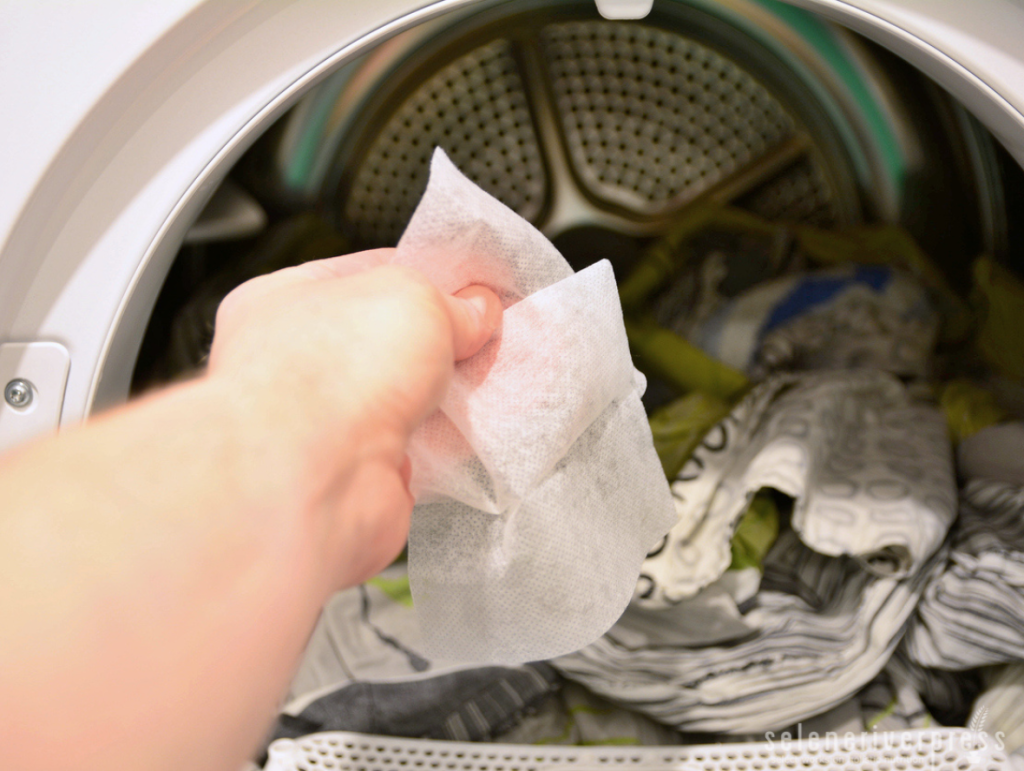
At Selene River Press, we usually focus on nutrient-dense foods, ancestral wisdom, and how to nourish our bodies from within. Sometimes, though, we come across something in daily life that makes us think, People should really know about this.
That’s exactly what happened with scented dryer sheets.
For years, these sheets have been a familiar part of American laundry routines. Soft sweaters, warm towels, and the scent of “fresh linen” from the dryer all feel harmless and comforting—except to those of us who know a synthetic scent where we smell one.
But when we looked into the research, things didn’t seem so comforting.
This post isn’t meant to spark fear, but awareness. The kind of awareness that lets you make empowered, informed choices for yourself and your family. That’s at the heart of everything we do here at SRP.
Here’s what we discovered.
1. Scented dryer sheets release more chemicals than many people realize
A study by Anne Steinemann and her team measured the air coming from home dryer vents after using scented laundry detergent and dryer sheets. They found over 25 volatile organic compounds (VOCs) released in just one load, including benzene and acetaldehyde, which are hazardous air pollutants and known carcinogens with no safe exposure level (study link).
Even more surprising, acetaldehyde emissions from one load of laundry were estimated to be about 3% of the total daily emissions from cars in that area (study link).
It’s hard to imagine that doing laundry could add to air pollution.
The same study also pointed out that fragrance ingredient lists are often incomplete or kept secret, so most people don’t really know what they’re being exposed to.
2. “Softness” comes with quaternary ammonium compounds (quats)
That silky feel dryer sheets leave behind doesn’t happen by magic. It’s created by a type of fabric softener called quaternary ammonium compounds, commonly referred to as quats.
These chemicals have been linked to:
- Skin irritation
- Respiratory irritation
- Potential endocrine disruption
In lab studies, some quats have also been linked to promoting antibiotic-resistant bacteria, which many people don’t know about (EWG link). These effects come not from touching the sheet, but from the residue left on your clothes and breathed in each time you wear them.
3. VOCs remain on your clothes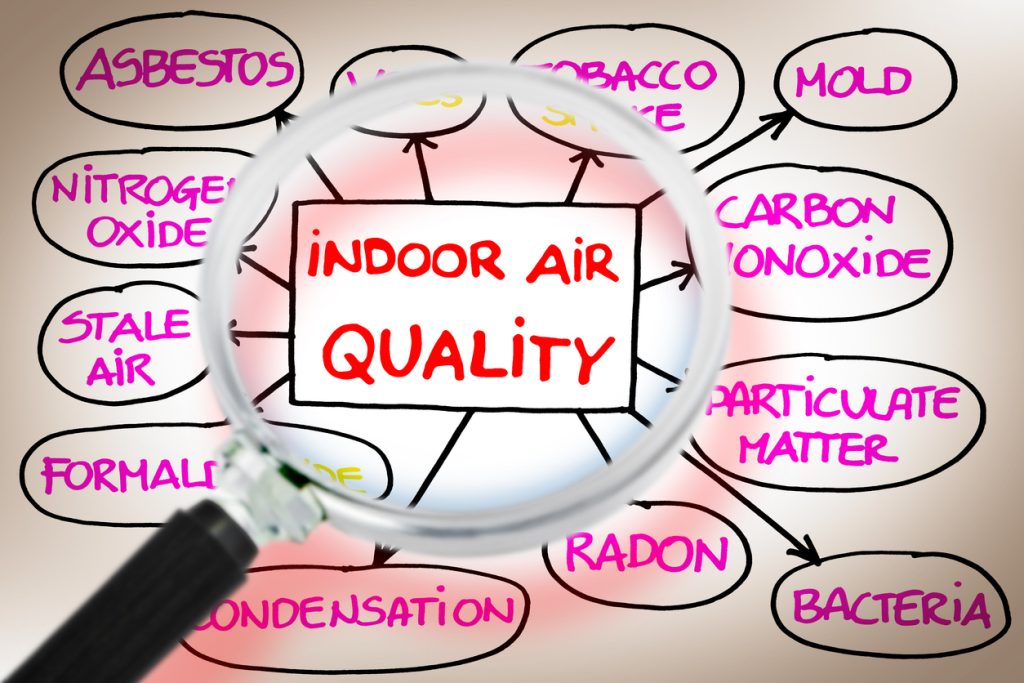
A 2022 peer-reviewed study looked at fabrics washed with fabric softener (the same kind used in dryer sheets) and compared them to fabrics washed in plain water. The fabrics treated with softener gave off 10–163% more VOCs, depending on the material.
The most common emitted chemicals included:
- d-limonene
- nonanal
- eucalyptol
These are common fragrance chemicals. They don’t just disappear in the dryer; they keep releasing into your laundry room, bedroom, closet, and the air you breathe for hours.
4. Sensitive individuals often feel the effects first
Steinemann’s national survey of over 1,000 U.S. adults found that 34.7% reported health problems from exposure to fragranced products, including laundry detergents and dryer sheets.
Common symptoms include:
- Headaches and migraines
- Difficulty breathing
- Asthma flareups
- Dizziness or brain fog
- Skin rashes or irritation
- Eye and throat irritation
For people with chemical sensitivities or asthma, scented laundry is a major trigger. What’s more, when people stop using fragranced products at home, they often notice a big improvement.
A 2024 clinical case series showed that when chemically sensitive individuals eliminated fragranced cleaners, air fresheners, and laundry products, their multi-system symptoms (respiratory, neurological, and cognitive) measurably improved.
These reactions are happening to real people in their own homes.
5. Heating fragrance chemicals can create new, more harmful byproducts
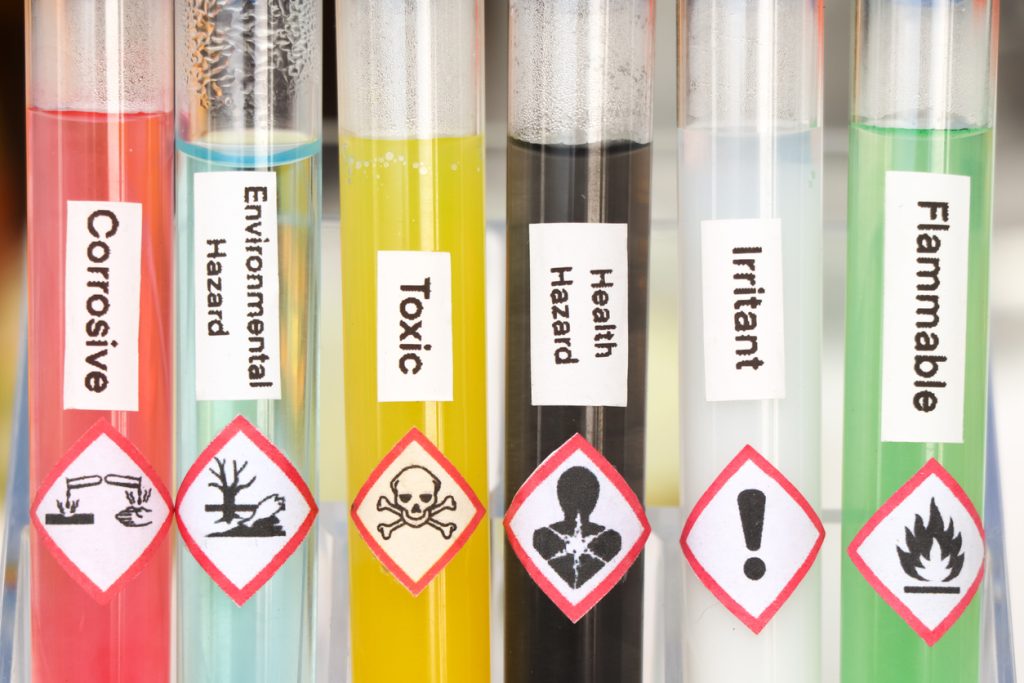
Sadly, scented dryer sheets don’t just release the fragrance listed on the box. When these fragrance chemicals are heated, they can form other pollutants, such as formaldehyde and acetaldehyde, both known irritants and classified as carcinogens.
So even if a product smells “natural,” the heat from your dryer can change its fragrance ingredients into something very different and much less safe.
6. The environmental impact is larger than most people imagine
Dryer sheets don’t break down naturally. Their chemicals build up in waterways, harm aquatic life, and add to both indoor and outdoor air pollution.
So much so that the California Air Resources Board now regulates dryer sheets as specifically VOC-emitting consumer products, subjecting them to formal VOC testing due to their pollution potential.
Most of us don’t think of laundry as an environmental issue, but it clearly plays a part.
7. So, what should you do instead?
The answer? Just skip dryer sheets. They aren’t needed. If you want extra softness or less static, here are some natural alternatives that work well:
Wool dryer balls (unscented)
- A few drops of a pure essential oil on wool balls, if your household tolerates scents well
- Fragrance-free dryer sheets (though still not perfect)
- Skipping fabric softeners entirely
We believe that the fewer unnecessary chemicals you have at home, the better your body can do what it does best: heal, repair, and thrive.
A final thought
At Selene River Press, we’re committed to sharing the truth, even when it isn’t wrapped in a pleasant “fresh linen” scent. Dryer sheets might seem unimportant, but the evidence shows they bring unnecessary chemicals into your home, your air, your clothes, and your body.
No one is saying that using one dryer sheet will cause illness. But when we consider all the exposures we face in modern life, it makes sense to cut out the ones that don’t offer any real benefit and may carry risks.
If a small change can help improve the air you breathe, reduce irritation, and support your health, we think it’s worth a try.
As always, we’ll keep researching, learning, and sharing what we discover, so you can make choices that support your health and well-being.
Resources & Further Reading
Steinemann et al., 2011 – Dryer Vent Emissions Study
Residential dryer-vent testing found more than 25 VOCs emitted during use of fragranced laundry detergent and dryer sheets, including benzene and acetaldehyde.
(Grist: https://grist.org/article/2011-08-24-your-dryer-vent-by-the-numbers/)
(JCU Research Online: https://researchonline.jcu.edu.au/22270/)
Anderson & Anderson, 2000 – Fabric Softener Pad Emission Toxicity
Mouse exposure study showing significant sensory irritation, pulmonary irritation, and airflow limitation from dryer-sheet emissions.
(PubMed: https://pubmed.ncbi.nlm.nih.gov/10836982/)
2022 Thailand Study – VOC Emissions From Softener-Treated Fabrics
Fabric softener increased VOC emissions by 10–163% compared with water-washed fabric; highlighted d-limonene and nonanal as major fragrance compounds.
(ResearchGate: https://www.researchgate.net/publication/365122971)
Steinemann – Health Effects of Fragranced Products
National survey showing 34.7% of adults experience health issues from fragranced products; includes symptoms triggered by laundry products and dryer sheets.
(Grist: https://grist.org/article/2011-07-28-scented-products-may-be-making-you-sick/)
(PMC: https://www.ncbi.nlm.nih.gov/pmc/articles/PMC5130300/)
ResearchGate: https://www.researchgate.net/publication/303890405)
EWG – Chemical Concerns in Fabric Softeners & Dryer Sheets
Explains risks from quaternary ammonium compounds (quats), synthetic musks, and phthalates.
(EWG: https://www.ewg.org/consumer-guides/cleaners)
Michigan State University – Ingredient Safety Summary
Overview of fragrance ingredients that may cause allergic reactions, migraines, or asthma in sensitive individuals.
(CRIS: https://www.canr.msu.edu/news/the_safety_of_dryer_sheets)
UW / Environmental Reporting – Hazardous VOC Emissions
Documentation of benzene, acetaldehyde, and other hazardous emissions from fragranced laundry products.
(UW Homepage: https://www.washington.edu/news/2011/08/24/scented-laundry-products-release-airborne-chemicals/)
Healthline – Summary of Dryer Sheet Irritation Risks
Overview of documented respiratory and dermatologic reactions, especially in sensitive individuals.
(Healthline: https://www.healthline.com/health/dryer-sheets-allergy)
Fragranced Product Emissions & “Greenwashing” Evidence
Peer-reviewed work showing that “green” or “natural” fragranced products emit VOC levels comparable to conventional versions.
(PMC: https://www.ncbi.nlm.nih.gov/pmc/articles/PMC4617249/)
Perales et al., 2022 – Reducing Chemical Exposure Improves Symptoms
Study demonstrating that reducing indoor chemical exposure (including fragranced products) measurably improved symptoms in chemically intolerant individuals.
(Cambridge University Press & Assessment: https://www.cambridge.org/core/journals/environmental-health-review/article/abs/impact-of-indoor-air-quality/)
Rincón et al., 2024 – Home Interventions Reduce Chemical Intolerance Symptoms
Case series showing significant improvement after removing fragranced and high-VOC products from homes.
(PMC: https://www.ncbi.nlm.nih.gov/pmc/articles/PMC10946607/)
Fabric Softener-Initiated Emissions (2022)
Demonstrates that softener-treated fabrics emit significantly higher VOC levels.
(tshe.org: https://tshe.org/ijhs/index.php/IJHS/article/view/133)
CARB 2023 Regulations – Dryer Sheets Classified as VOC-Emitting Consumer Products
California Air Resources Board officially categorizes single-use dryer sheets as VOC-emitting and subject to emissions testing.
(CARB: https://ww2.arb.ca.gov/resources/documents/consumer-products-regulations)
Images from iStock/hamikus (main), Francesco Scatena (indoor air quality), Kittisak Kaewchalun (chemicals vials).

