
 Get self-health education, nutrition resources, and a FREE copy of A Terrible Ten: Health Foods That Ain't ebook.
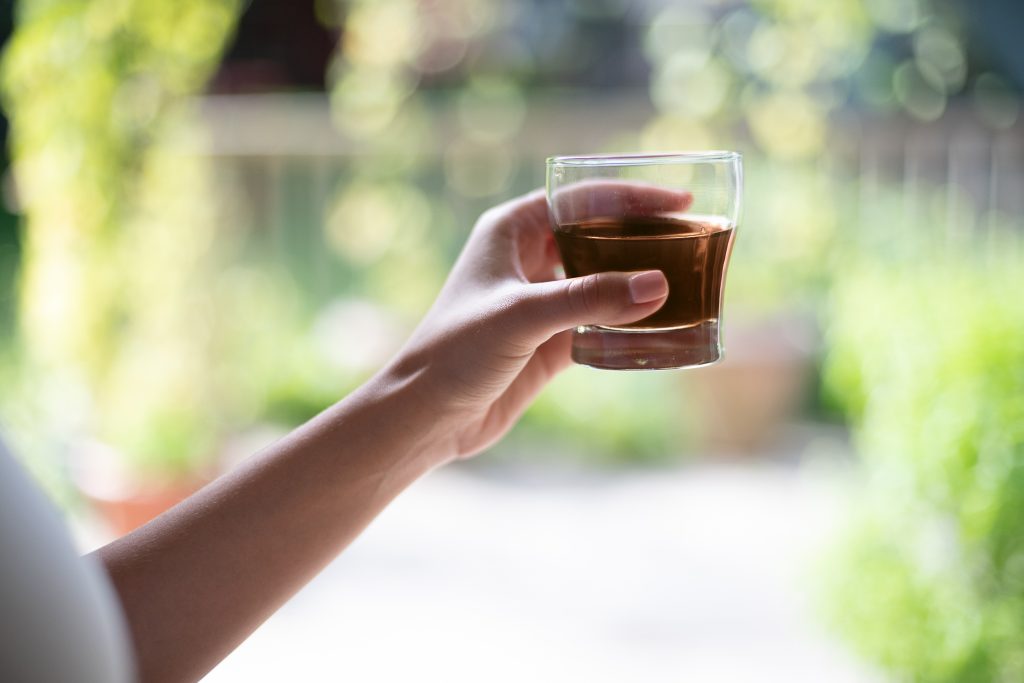
Walk into almost any modern grocery store and the word “tea” usually brings to mind something simple: a tea bag, hot water, and a few minutes of steeping. However, teas have a different tradition that started long before tea bags became commonplace.
Long before standardized extracts, capsules, powders, and supplements became commonplace, herbs and plants were frequently prepared for consumption using water and heat. Depending on the compound involved, preparation could include steeping, simmering, boiling, or allowing plant material to remain in water for an extended period.
One of the more interesting examples of this tradition is Essiac, an herbal preparation with over 100 years of history. Its modern history is closely associated with Canadian nurse René Caisse. Regardless of the health claims that have surrounded Essiac over the decades, its history offers a useful window into a broader subject: how traditional herbal preparations developed, why preparation methods matter, and how we can discuss historical botanical practices responsibly in an age of modern scientific research.
What Is an Herbal Decoction?
Herbal teas are not all prepared in the same way. An infusion generally involves pouring hot water over plant material and allowing it to steep. This method is commonly associated with softer plant parts, such as leaves and flowers.
A decoction typically involves heating or simmering botanical material in water for a longer period. This approach has traditionally been used for tougher plant materials such as roots and bark.
The distinction is particularly relevant to Essiac because several herbs historically associated with Essiac formulas are roots or bark. The commonly recognized four-herb formulation contains burdock root, sheep sorrel, slippery elm bark, and rhubarb root. This formulation can be traced back to René Caisse in the 1920s.[1]
From a preparation standpoint alone, Essiac already looks quite different from the typical cup of herbal tea. Rather than simply dipping a tea bag into hot water for a few minutes, traditional preparation generally involves heating the herbs in water and allowing the mixture to steep for an extended period. That being said, this method also carries its own form of convenience – you can brew a big batch and store it in the refrigerator, which removes the burden of making the tea one cup at a time.
René Caisse and the Modern History of Essiac

The modern story of Essiac is inseparable from René Caisse, a Canadian nurse born in 1888. Caisse became associated with an herbal preparation during the early 20th century and eventually used the name “Essiac” — her surname spelled backward — for the formula.
Over the following decades, her work attracted considerable public interest – as well as controversy. She operated a clinic in Bracebridge, Ontario, and became the central figure in what would eventually become a surprisingly complicated history involving different formulas, collaborators, researchers, manufacturers, and interpretations of her work.
One of the important people in the later Essiac story was Dr. Charles Brusch, an American who was most famously known as President Kennedy’s personal physician. He worked with Caisse during the years of 1959 through 1967. Historical materials held by Genuine Essiac document this period and the evolution of the formula beyond its earlier four-herb version. Because independent modern sources most consistently document the four-herb version, any discussion of the later eight-herb formula should be presented as historical documentation rather than as a universally standardized definition of Essiac. After all, the word Essiac has come to mean all the various forms of this herbal blend.
Why Are There Different Essiac Formulas?
Many people who first research Essiac assume there must be a single universally accepted recipe. The history is not that straightforward.
The formula most commonly associated with René Caisse consists of four botanicals:
- Burdock root
- Sheep sorrel
- Slippery elm bark
- Rhubarb root
Later historical accounts describe expanded versions with additional botanicals, including an eight-herb formula. This is one reason consumers encounter different Essiac products and recipes today. The additional herbs were designed to increase the potency of the blend, and were chosen based upon the research done by René Caisse and Dr. Charles Brusch.
The existence of multiple formulas sometimes leads to arguments about which one should be considered “original,” “authentic,” or “real.” From a historical perspective, however, a more useful question may be: what period of Essiac’s development are we talking about?
A formula used at one point in a botanical tradition does not necessarily tell us everything about how that tradition developed later. This is not something unique to only Essiac. Herbal traditions are filled with recipes that changed as knowledge, ingredients, practitioners, and circumstances shifted. Modern consumers are accustomed to standardized commercial products, so we often expect historical formulas to function like modern manufacturing specifications. However, history is rarely that tidy, especially with so many influencing it over time. René Caisse herself learned of the formula from an Ojibwa medicine man. Essiac originated from the Ojibwa tribe.
The Importance of Looking at the Plant Itself
Essiac also provides a useful lesson in botanical literacy. Knowing a plant name is not enough. Different parts of the same botanical — root, leaf, flower, bark, seed, or stem — can contain different naturally occurring compounds. The way a plant is harvested, processed, stored, and prepared can also affect the resulting preparation.
Consider burdock, or Arctium lappa. A 2021 review in Food Research International described burdock root as a source of inulin-type fructans and other naturally occurring compounds, including chlorogenic acids, lignans, and quercetin.[2] A broader review of Arctium lappa has also examined its ethnopharmacology, phytochemistry, and modern research literature.[3]
Rhubarb provides another example of the importance of precise botanical identity. The European Medicines Agency maintains a formal herbal monograph for Rhei radix, covering the roots of Rheum palmatum L. and Rheum officinale Baillon.[4] This illustrates how modern herbal assessment depends on identifying the plant species and plant part rather than relying only on a common name. This is especially true when procuring herbs internationally.
Slippery elm, traditionally valued for its inner bark, contains mucilaginous material that gives it a distinctive texture when combined with water. Sheep sorrel is another example where the specific plant part used can matter when comparing historical recipes.
When an herbal formula combines leaves, roots, bark, and other botanical materials, preparation becomes more than an afterthought. It is one part of understanding what the traditional preparation actually was. There is a specific method to brewing Essiac tea.
Whole Herbs Versus Modern Extracts
It’s tempting to think about taking a shortcut and finding a way to make Essiac more convenient. While it only takes ten minutes once every two weeks to make, it still takes a bit of time, and you must bring the liquid along with you if you go out and about to consume it on schedule. Modern supplement manufacturing has made it possible to isolate, concentrate, standardize, encapsulate, and extract plant constituents in ways earlier herbal practitioners could never have imagined.
A standardized extract can offer consistency and precise measurement of selected constituents. A traditional whole-herb preparation, on the other hand, contains a much broader mixture of naturally occurring plant compounds.
These approaches should not be treated as interchangeable.
This distinction is especially important when reading research. A laboratory study involving an isolated compound from a plant does not establish that drinking a traditional preparation of that plant will produce the same result. Likewise, research involving a concentrated extract cannot automatically be applied to a multi-herb decoction.
Those distinctions may sound overly technical, but they are essential to responsible conversations about herbal wellness.
One benefit of choosing whole powdered herbs instead of an extract is that you are going to be able to consume the fibrous part of the plant remaining in the brew. Likewise, by avoiding formulas that use whole herbs, you won’t have to strain anything out and will be able to consume this important fiber. Similarly to consuming a whole apple and not just apple juice, consuming the whole plant means that you are going to benefit from more components present in these herbs.
Traditional Use Is Not the Same as Clinical Evidence

Perhaps the most important lesson Essiac’s history can teach modern wellness consumers is how to separate historical use from scientific evidence. Something can have a fascinating and well-documented history of traditional use without having strong clinical evidence demonstrating that it treats a disease. Those are two different questions.
Historical research asks questions such as:
- What plants were used?
- How were they prepared?
- Who used them?
- How did the formula change over time?
- What records survive?
Modern clinical research asks different questions:
- What happens when a particular preparation is studied under controlled conditions?
- What dose was used?
- What outcomes were measured?
- Were the results replicated?
- Were humans studied, or only cells or animals?
These categories should not be blurred.
Laboratory and preclinical research can help scientists understand the chemistry and biological activity of plants and their constituents, but it does not automatically demonstrate a clinical benefit in humans. Likewise, testimonials and historical accounts may be interesting pieces of a tradition’s history, but they are not substitutes for controlled clinical evidence.
Recognizing those distinctions does not diminish herbal history. Rather, it makes the discussion more credible.
What Modern Wellness Can Learn From Traditional Preparation
Today’s wellness industry tends to reward convenience. We want powders that dissolve instantly, capsules that require no preparation, concentrated extracts, and ready-to-drink products.
Traditional herbalism reminds us that preparation was once considered part of the practice itself. Roots might be simmered. Herbs might steep for hours. Plant material might be ground, mixed, or prepared in specific proportions.
That does not mean every traditional method is scientifically superior. Nor does it mean older is automatically better. It simply means that if we want to understand a traditional botanical preparation, we should study the preparation as well as the ingredient list.
This is particularly relevant as researchers increasingly investigate traditional plants using modern analytical methods. Knowing exactly which plant species, plant part, concentration, and preparation method were used is essential if meaningful comparisons are going to be made. For instance, the Ojibwa originally created this formula using grinding stones to powder the herbs. Many brands today continue on with that tradition.
There has been some modern research on these herbs. You can see the preclinical trial about Essiac tea and DNA repair here in a mice study. [5]
The Challenge of Bringing an Old Formula Into the Modern World
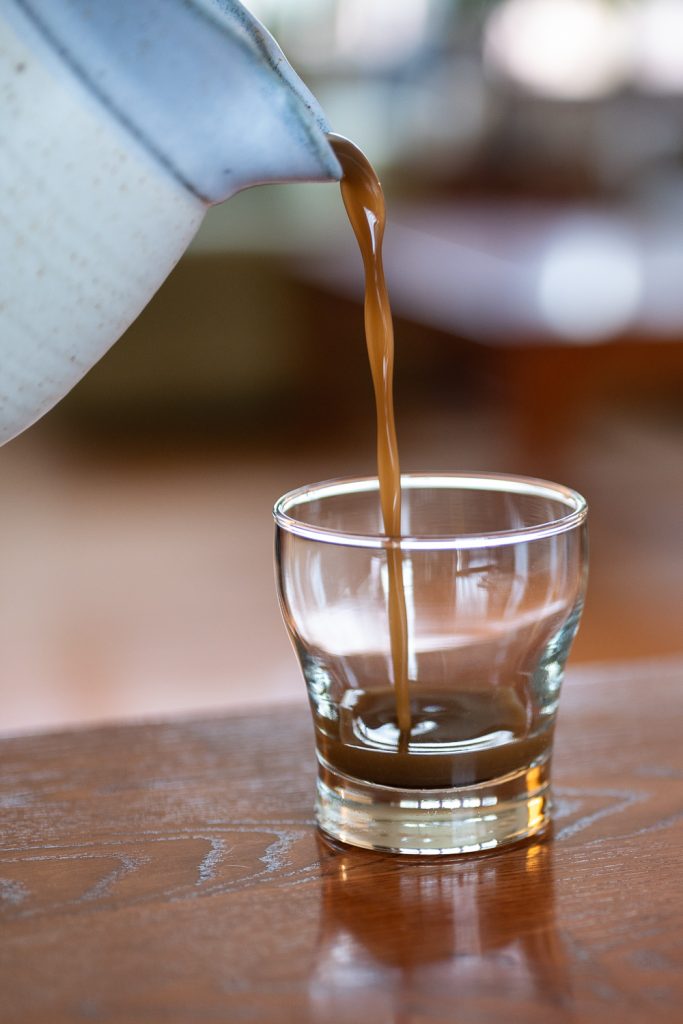
Traditional herbal preparations face another challenge that earlier generations rarely confronted: modern expectations around consistency and quality control. Today, responsible botanical companies must think about botanical identification, sourcing, processing, batch consistency, microbial quality, contaminants, storage, labeling, and preparation instructions. That creates an interesting intersection between old and new.
A formula may have a century of history behind it, but the herbs still move through a modern supply chain. In today’s world, there are more concerns with potential contaminants. This makes third party testing a non-negotiable.
Consumers therefore should not evaluate an herbal product solely by the story attached to it. They can also ask practical questions:
- Are the botanical species clearly identified?
- Which parts of the plants are used?
- Are preparation instructions specific?
- Does the company third-party-test its ingredients or finished products?
- Does it distinguish traditional history from established scientific evidence?
These questions can be useful whether someone is researching Essiac or virtually any other traditional herbal preparation.
Preserving History Without Overstating It
Essiac occupies an unusual place in herbal history because its story spans Indigenous knowledge, a Canadian nurse, physicians, researchers, commercial manufacturers, and generations of consumers.
It has also accumulated extraordinary claims over the years. That makes careful documentation particularly important.
The goal of studying a traditional preparation should not be to turn every historical story into a modern medical claim. Nor should the absence of definitive clinical evidence cause us to discard the history altogether. There is room for a more thoughtful middle ground. We can document what people used. We can investigate how formulas developed. We can study the plants and their chemistry. We can distinguish laboratory findings from human clinical evidence. And we can preserve historical knowledge without promising outcomes that research has not established.
A Tradition Worth Studying
More than a century after René Caisse became associated with the herbal preparation that would carry her name backward, Essiac continues to generate curiosity. Perhaps one reason is that its story touches on questions that extend far beyond a single herbal formula.
How should traditional knowledge be preserved? What happens when a folk preparation enters modern commerce? How important is preparation? How do formulas evolve? And how should historical experience coexist with modern scientific standards? Those are worthwhile questions for anyone interested in herbal wellness.
Essiac’s history does not provide simple answers. Instead, it offers something arguably more useful: a case study in how traditional botanical knowledge travels through generations, changes over time, and eventually encounters the expectations of modern science.
The challenge today is neither to romanticize that history nor dismiss it. It is to document it carefully, study it responsibly, and understand traditional herbal preparations for what they are — part of a long and evolving relationship between people and plants.
References
[1] Thomas, Richard. The Essiac Report: The Remarkable Story of a Canadian Herbal Cancer Remedy and of the Thousands of Lives It Continues to Save. Alternative Treatment Information Network, 1993.[2] Moro TMA, Clerici MTPS. “Burdock (Arctium lappa L) roots as a source of inulin-type fructans and other bioactive compounds: Current knowledge and future perspectives for food and non-food applications.” Food Research International. 2021;141:109889. PubMed PMID: 33641945. https://pubmed.ncbi.nlm.nih.gov/33641945/
[3] Review literature on Arctium lappa ethnopharmacology, phytochemistry and biological research. PubMed PMID: 36516694. https://pubmed.ncbi.nlm.nih.gov/36516694
[4] European Medicines Agency. “Rhei radix — herbal medicinal product.” European Union herbal monograph on Rheum palmatum L. and Rheum officinale Baillon, radix. https://www.ema.europa.eu/en/medicines/herbal/rhei-radix
[5] Veronica Martinez Marignac, Leonel Mondragon, Oertlin Gloria, Lucia Cervantes, Fernanda Cantero, Jose Favant. Preclinical study of genuine essiac formula: A cancer treatment eight-herbs’ tea minimizes DNA insult of X-rays. Clinical Cancer Investigation Journal
ISSN Print: 2278-1668, Online: 2278-0513 https://ccij-online.org/article/preclinical-study-of-genuine-essiac-formula:-a-cancer-treatment-eight-herbs’-tea-minimizes-dna-insult-of-x-rays-850
Editorial note: This article is educational and historical in nature. It does not claim that Essiac treats, cures, or prevents disease. Historical accounts and modern scientific evidence are intentionally distinguished throughout.
All photo courtesy of Genuine Essiac. Historical image from the period associated with René Caisse and Dr. Charles Brusch Genuine Essiac images from The Essiac Report by Richard Thomas.

