
 Get self-health education, nutrition resources, and a FREE copy of A Terrible Ten: Health Foods That Ain't ebook.
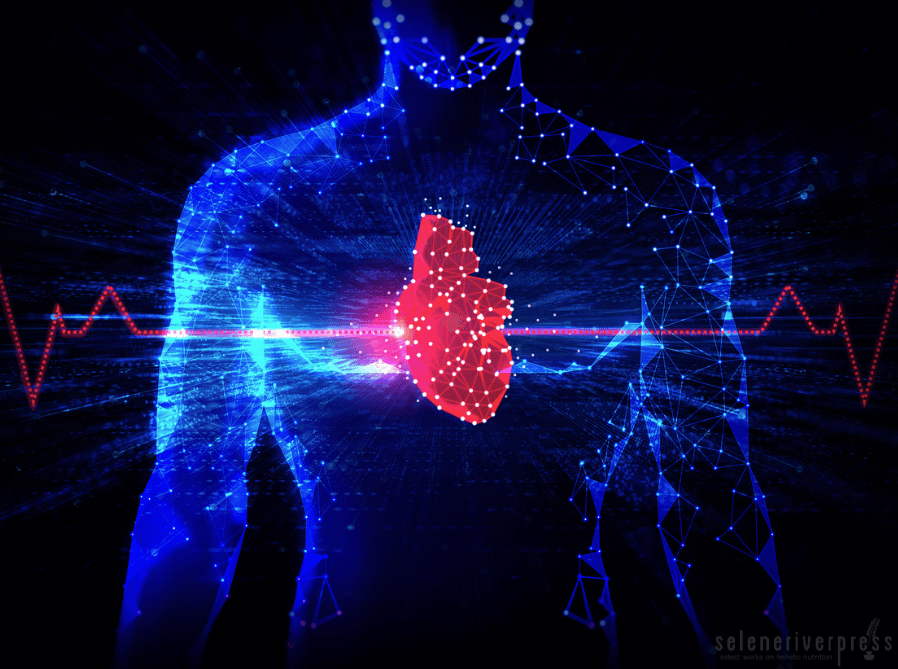
February is often marked by reminders about the heart: Statistics, warnings, awareness campaigns that urge attention, urgency, and action. Let’s run a 5k with a cheesy Valentine’s Day candy hearts shirt to show we care about the leading cause of death for Americans!
But for many practitioners, heart health has never been something confined to a month or reduced to numbers on a chart. It’s something observed slowly, carefully, over years of practice. Something revealed not only in crisis, but in patterns. In rhythm. In what holds steady, and in what quietly begins to falter long before symptoms appear.
At Selene River Press, we approach the heart the same way we approach health itself: with respect for time, design, and holistic truth. We promote Dr. Lee’s nonpareil Heart Sound Recorder that, as Mark Anderson eloquently explains:
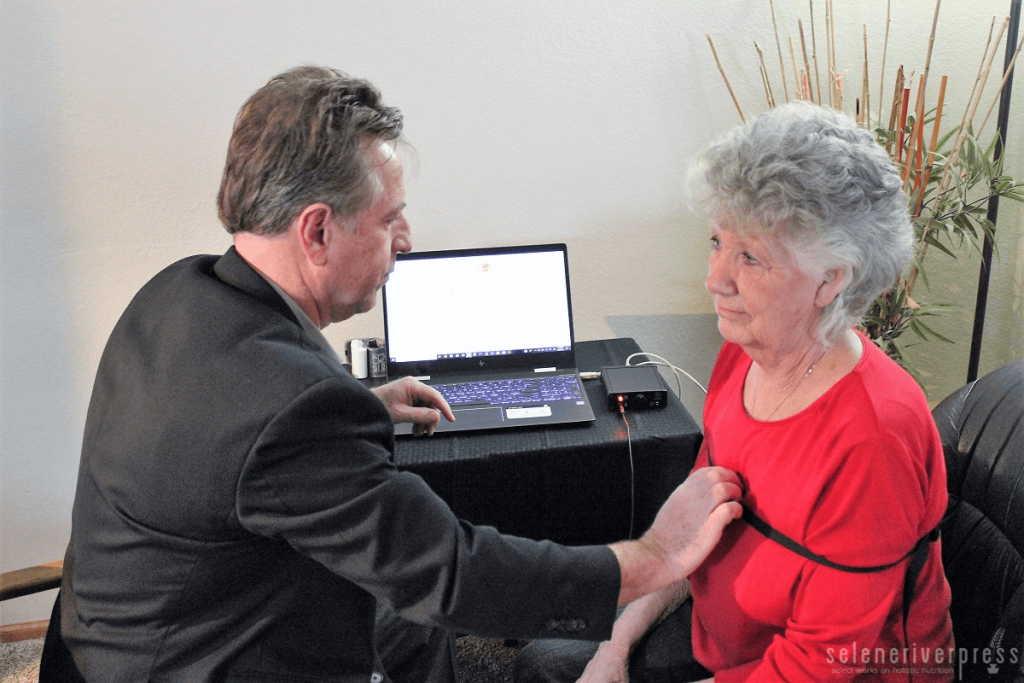
“To this day, no heart instrument is more capable of foreseeing cardiac events before they occur. And no instrument can detect virtually all nutritional deficiency patterns impacting the heart in such a nuanced manner. And no cardiac instrument can do all this with such ease, speed, and low cost for both the doctor and the patient.”
The heart is not simply an organ to manage when it fails. It is a reflection of how well the body has been supported to preserve itself over the course of one’s life.
Mark Anderson has spent years teaching this perspective, often without crudely naming it simply as “heart health.” Instead, he speaks about rhythm before collapse. Structure before breakdown. Regulation before reaction.
His cardiovascular teachings are woven throughout his work, grounded in the same principles that guided Dr. Royal Lee: that the body was designed with intelligence, that coordination matters more than control, and that true resilience is built quietly, long before it is tested.
This post brings together several of Mark’s Webinar Wednesday teachings from across different years. When viewed together, they reveal a consistent and deeply practical philosophy of cardiovascular preservation. Not a strategy for chasing heart health, but a way of understanding what allows the heart to endure, adapt, and remain resilient over time.
The Heart as a Predictor, Not a Performer
The Most Asymptomatic Yet Perilously Predictive Heart Pattern (March 20, 2024)
Mark opens this webinar by drawing attention to a pattern that often goes unnoticed precisely because it does not announce itself loudly.
“Some of the most dangerous heart patterns are not the ones that make people feel bad. They’re the ones that feel fine until they don’t.”
Rather than focusing on pain or discomfort, Mark directs attention to predictability. The heart, he explains, gives clues long before crisis occurs, particularly through rhythm. Irregularity is not framed as a diagnosis, but as information, evidence that coordination is beginning to falter.
“When the heart loses rhythm, it loses efficiency. And when it loses efficiency, it loses its margin of safety.”
Throughout the webinar, Mark distinguishes between performance and preservation. A heart can continue beating while quietly losing resilience. The absence of symptoms does not mean the absence of risk. It often means the body is compensating.
“Symptoms tend to show up late. Patterns show up early.”
This perspective reframes heart health entirely. Rather than reacting to failure, Mark teaches listeners how to observe rhythm, regularity, and predictability as markers of long-term cardiovascular stability. Preservation, in this context, is not about intervention, but rather about maintaining the conditions that allow the heart to remain coordinated year after year.
Rhythm Requires Nutrition, Not Just Monitoring
3 Vitamins That Don’t Exist But They’ll Kill You If You Don’t Eat Them (March 19, 2025)
In a webinar that challenges conventional nutrient language, Mark revisits foundational nutritional concepts to explain something modern physiology often overlooks: rhythm is nutritional.
Discussing what he refers to as vitamins that don’t exist, Mark focuses on functional deficiencies, nutrient factors necessary for coordination that are not always recognized as nutrients in contemporary models.
“One of the most overlooked consequences of deficiency is loss of rhythm. Muscles don’t fire on time. Nerves don’t conduct properly. The heart doesn’t coordinate the way it should.”
Rather than isolating the heart, Mark places it within a broader system of electrical communication. Rhythm depends on timely signaling, and timely signaling depends on adequate nutritional support for nerve and muscle function.
“The heart is a muscle with an electrical system. If either side of that equation is compromised, rhythm becomes unstable.”
What makes this teaching particularly relevant to heart health is its emphasis on prevention through sufficiency. Mark does not frame these deficiencies as rare or dramatic. He describes them as common, quiet, and cumulative.
“Deficiency doesn’t usually announce itself all at once. It erodes coordination gradually, until the system no longer has the reserve it once did.”
In this way, the webinar identifies critical nutrients that are often overlooked, and reinforces the idea that cardiovascular resilience is built nutritionally over time. Rhythm is not something imposed externally. It is something the body maintains when foundational needs are met.
Preservation Begins with Structure
The Three Triads of Physical Preservation (January 3, 2024)
At the beginning of 2024, Mark steps back from individual organs and systems to lay out a broader framework for understanding physical resilience.
“It’s always good to start the year with some of the very basic tenets.”
Those tenets, he explains, are not simplistic. They are foundational. Preservation depends on structure, regulation, and adaptation, three conditions without which the body begins to compensate rather than sustain.
“What we’re really talking about are the things that allow the body to hold itself together over time.”
Although this webinar is not exclusively about the heart, the implications for cardiovascular health are clear. The heart relies on structural integrity, regulated signaling, and adaptive capacity. When those foundations weaken, the heart may continue to function, but it does so at a cost.
“If those basics aren’t in place, everything else becomes compensatory. You’re no longer preserving health. You’re trying to manage loss.”
In the context of heart health, this framework helps explain why cardiovascular issues often develop silently. Loss of preservation precedes failure. The heart reflects the same truth as the rest of the body. Resilience depends on the maintenance of basic conditions, not emergency responses.
Winter as a Stress Test for the Heart
Winter Ills (January 2020)
One of Mark’s earlier winter teachings offers a perspective that remains strikingly relevant.
“It’s not exposure that determines whether someone gets sick. Exposure happens all the time. What determines the outcome is the condition of the body.”
Although this webinar addresses seasonal illness broadly, its implications for heart health are profound. Winter places additional demands on circulation, oxygen delivery, and metabolic coordination. Cold does not create weakness. It reveals it.
“Health is not something you react to once symptoms show up. Health is something you prepare for.”
From a cardiovascular perspective, winter becomes a mirror. Hearts that are resilient adapt to increased demand. Hearts that have lost reserve struggle quietly, often without dramatic warning signs.
This teaching reinforces a central theme running through all four webinars: preparation precedes preservation. The heart’s ability to withstand stress, seasonal or otherwise, is determined long before the stress arrives.
A Consistent Cardiovascular Philosophy
Together, these teachings point to a way of thinking about heart health that is rarely discussed today. Rather than offering tactics, he returns again and again to the conditions that allow the heart to endure over time.
The heart, in his framework, reflects:
- Nutritional adequacy
- Electrical coordination
- Structural integrity
- Adaptive capacity
Resilience is not built by reacting to symptoms, nor by chasing performance metrics. It is preserved by maintaining the conditions that allow rhythm, efficiency, and reserve to remain intact over time.
February’s focus on heart health offers an opportunity to revisit this deeper perspective. Not to add more urgency, but to restore orientation. The most meaningful cardiovascular work is often quiet, unglamorous, and cumulative.
And that, perhaps, is Mark’s most consistent message:
Health is preserved, not chased.
Practitioner Call to Action: Webinar Wednesday
For practitioners, engaging with this kind of thinking requires something more than continuing education credits or surface-level updates. It requires courage.
Courage to question a health industry that increasingly rewards speed over substance. Courage to resist reductionist answers that treat symptoms while ignoring structure. Courage to stay grounded in principles that do not always align with the dominant narrative but consistently align with physiology and lived clinical experience.
Mark Anderson’s Webinar Wednesday is not designed to fit neatly into a broken system. It exists to challenge it. It’s where ideas unfold patiently, layer by layer, across years rather than headlines.
Each webinar is an invitation to think more deeply, to observe more carefully, and to practice with greater integrity. This is where foundational truths are revisited, refined, and preserved, not because they are easy, but because they work.
If you are a practitioner who believes that health is something to be cultivated, not outsourced, and that the heart reflects long-term stewardship rather than short-term intervention, we invite you to join or rejoin Webinar Wednesday. Not to follow trends or chase protocols, but to stand firmly in principles that honor the body’s design and the responsibility we carry as practitioners to protect it.
Truth in health has always required courage. This is a place for those who have the heart to carry it forward.
Images from iStock/ArtemisDiana (main), Jacob Wackerhausen (woman on a laptop), fizkes (man holding his heart),

