
 Get self-health education, nutrition resources, and a FREE copy of A Terrible Ten: Health Foods That Ain't ebook.

There are webinars you watch and take notes on.
And then there are webinars that make you sit back in your chair because patterns you’ve observed for years suddenly click into place.
Endocrine Resilience & Biology of Aging has quickly become one of those sessions for many in the Webinar Wednesday community. Practitioners have described it as eye-opening. Why? Because it was loud and dramatic? No. Because it connected pieces that had been scattered for years.
In this presentation, Mark Anderson does something rare. He reframes aging without sensationalism. No promises of reversal. No biohacking shortcuts. Just a disciplined walk through immune surveillance, endocrine vulnerability, and regulatory breakdown until the big picture becomes unmistakable.
It feels like a quiet mic-drop moment of shocking clarification.
And when this teaching is placed beside two other webinars, Vital PMG Support for Over 65 Years and The Rise and Fall of the Antioxidant Era, it becomes clear that this wasn’t a standalone insight. It was the culmination of a regulatory philosophy that has been building steadily over time.
Aging as Endocrine Vulnerability
Endocrine Resilience & Biology of Aging (December 3, 2025)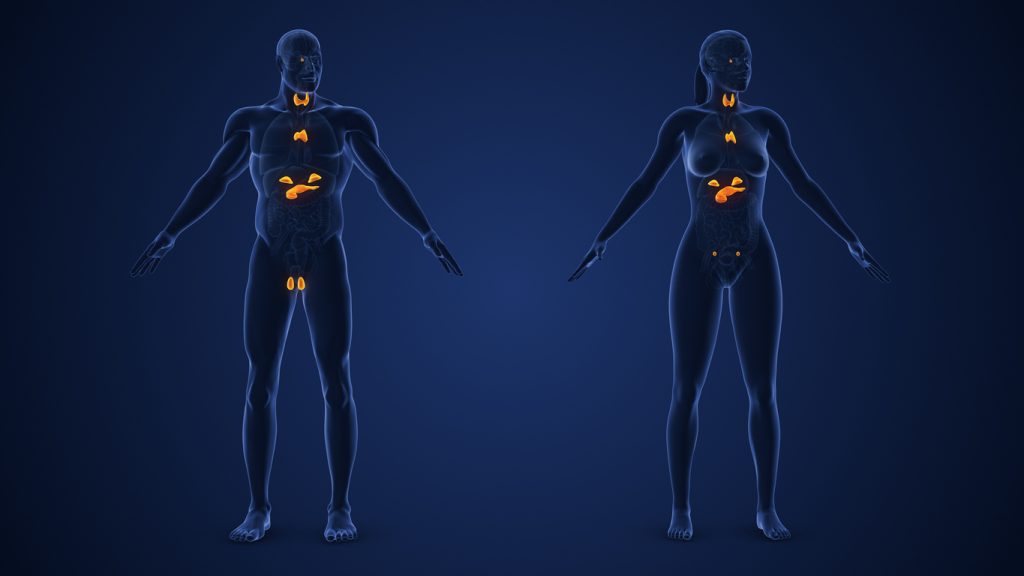
In this newer and widely appreciated webinar, Mark sets the tone immediately. Aging, he explains, must be understood through the lens of immune-endocrine interaction.
Early in the presentation, he cites the growing body of literature describing what some researchers now call the “autoimmuneome” of aging:
“Aging affects the expression and development of autoantibodies and autoreactive T cells, which can be seen in their sum as the autoimmuneome of an individual.”
This framing is essential. Rather than treating aging as a passive decline, Mark emphasizes that aging involves an active immune surveillance process that increasingly targets vulnerable tissues, especially endocrine glands.
Later in the webinar, he highlights why endocrine tissues are uniquely exposed:
“When it comes to the endocrine glands themselves, the most attractive to autoantibody creation is number one, of course, we know the thyroid, number two, we know the pancreas, number three, the adrenals, number four, the pituitary, five, the ovaries or testes, and the parathyroid. Now, why are endocrine glands so vulnerable?”
He answers by describing their physiology. Endocrine glands are highly vascular. They secrete constantly into the bloodstream. Their hormones are repeatedly inspected by immune surveillance. And they have limited regenerative capacity.
This leads to one of the more clinically sobering statements in the webinar:
“Minor effect of antibody disruption has major consequences.”
The endocrine system operates through feedback loops. Thyroid stimulating hormone regulates thyroid output. Cortisol influences pituitary signaling. Gonadal hormones communicate with hypothalamic centers. When even small autoimmune disruptions interfere with this feedback, the regulatory coherence of the system begins to fragment.
In one referenced study on anti-hypothalamus and anti-pituitary antibodies, Mark quotes the conclusion:
“The study demonstrates for the first time the presence of anti-hypothalamus and anti-pituitary antibodies… thus suggesting that autoimmunity may have a role in the pathogenesis.”
The framing remains physiological, grounded in regulatory function rather than reaction.
Aging, in this framework, is not simply “wear and tear.” It is progressive regulatory destabilization driven by immune targeting of glands that coordinate the entire organism.
What makes this webinar resonate so strongly with practitioners is its clarity: if endocrine structure is not preserved, systemic regulation cannot be maintained. The loss of resilience is not mysterious. It is structural.
Clinical Application in the Aging Population
Vital PMG Support for Over 65 Years (February 7, 2024)
Where Endocrine Resilience explains mechanism, Vital PMG Support for Over 65 Years moves into application.
Mark begins this webinar by acknowledging a practical reality:
“Anyone over 65 years of age, I constantly get questions… what protomorphogens should I be taking?”
He makes it clear that aging does not present uniformly. Individuals age with different combinations of organ and tissue challenges. But patterns do emerge. And the endocrine system remains central.
He revisits the vulnerability described in the earlier webinar:
“The endocrines are highly vascularized so they have an increased exposure to the immune surveillance… because it’s always putting stuff in the blood, the immune surveillance system is saying, ‘Okay, if there’s anything wrong with those hormones… they get tagged.’ And then that endocrine gland gets tagged. They have a low regenerative capacity because they’re very small.”
Here the teaching becomes practical. If endocrine glands are increasingly subject to autoimmune tagging with age, and if their regenerative capacity is limited, then preserving their structural integrity becomes a clinical priority.
Mark outlines the logic of multi-glandular protomorphogen formulas and emphasizes that these formulas are constructed intentionally, reflecting endocrine interdependence rather than isolated support.
Later, discussing adrenal vulnerability, he reinforces a critical principle: aging support cannot be fragmented. The endocrine glands operate in coordinated loops. Supporting one without acknowledging the others ignores regulatory architecture.
This webinar does not promise reversal of aging. It emphasizes preservation.
Preserve structure. Preserve feedback. Preserve regulatory coherence.
The Collapse of Reductionism
The Rise and Fall of the Antioxidant Era 1985–2025 (presented December 17, 2025)
If the first two webinars describe aging as endocrine destabilization, this third one addresses why a dominant aging theory failed to account for it.
In the introduction, Mark frames the presentation as a continuation of the endocrine discussion:
“Looking forward to today’s presentation… which really is somewhat of a continuation… when we considered the aging, endocrine resilience and the biology of aging.”
He then turns to the oxidative stress theory that dominated aging conversations for decades.
Quoting from biochemical literature, he reads:
“Currently, the oxidative stress or free radical theory of aging is the most popular explanation of how aging occurs at the molecular level.”
And then, with characteristic restraint, he explains what happened by reading from a study he references in his webinar:
“Over the past eight years, our laboratory has conducted exhaustive study on the effect of under or over expressing a large and wide variety of genes coding for antioxidant enzymes.”
The conclusion? Megadose antioxidant therapy failed to produce the expected extension of health or lifespan. The regulatory system did not respond as predicted.
Mark summarizes the error succinctly:
“These antioxidants are not just not working. They are working. They’re doing a bad thing.”
The problem, he argues, was reductionism. Aging was treated as chemical rust rather than regulatory failure. Oxygen was treated as an enemy rather than a regulated signaling component. Antioxidants were isolated from their whole-food matrix and administered as if quantity alone could restore balance.
But endocrine aging does not unfold because of simple oxidative accumulation. It unfolds because regulatory feedback loops destabilize, immune targeting increases, and glandular structure declines.
In this context, the collapse of antioxidant theory becomes understandable. It addressed damage. It did not address regulation.
A Coherent Regulatory View of Aging
Taken together, these three webinars form a disciplined physiological model:
- Aging involves increasing autoimmune targeting of endocrine glands.
- Endocrine tissues have limited regenerative capacity and are structurally vulnerable.
- Minor disruptions in feedback loops produce major systemic consequences.
- Reductionist antioxidant strategies failed because they ignored regulatory architecture.
The unifying theme is preservation of structure.
Preserve the pituitary, thyroid, adrenals, pancreas, and gonads, and the organism maintains coherence. Allow autoimmune disruption and structural atrophy to accumulate, and regulation fragments.
For practitioners, this reframes priorities. Instead of chasing downstream symptoms, attention returns upstream to regulatory centers. Instead of megadosing isolated antioxidants, support focuses on whole-food matrices and glandular integrity.
For thoughtful individuals, the message is equally grounding. Aging is not random. It follows patterns. Those patterns can be understood. Not controlled completely or reversed indefinitely, but understood, and therefore approached with discipline rather than panic.
A Discipline, Not a Trend
These webinars do not exist as isolated lectures. They are part of a larger corrective.
Endocrine Resilience & Biology of Aging may be one of the newer and most discussed Webinar Wednesday sessions, but it represents a continuation of something far older: a disciplined commitment to regulatory physiology.
Vital PMG Support for Over 65 Years shows how physiology becomes clinical preservation. The Rise and Fall of the Antioxidant Era demonstrates what happens when regulation is replaced by reductionism.
Together, they form a coherent teaching arc: aging is not chaos. It is structural attrition. And structure can be respected, supported, and preserved.
Mark Anderson’s Webinar Wednesday is not built around trends in longevity science. It is built around principles that hold under scrutiny, decade after decade. This is where regulatory thinking is refined. Where immune-endocrine relationships are examined without exaggeration. Where preservation is valued over reaction.
For practitioners who want more than protocols, who want physiological clarity, this is where the work continues.
This Is Why We Write These
We, Danielle and Stephanie, write these recap posts because these teachings matter to practitioners and their patients.
We have watched what happens when aging is reduced to headlines, when oxidative stress becomes a marketing slogan, and when endocrine collapse is reframed as “normal.” We have seen practitioners pressured to conform to protocols that sound scientific but ignore structure. We have watched entire generations of clinicians taught to chase labs while overlooking regulatory architecture.
And we refuse to let that become the standard.
Mark Anderson’s Webinar Wednesday is not just educational programming. It is a preservation effort. It is where physiology is protected from oversimplification. Where autoimmune vulnerability is discussed without panic. Where endocrine structure is treated as sacred, not disposable.
If you are a practitioner who senses that something is missing in modern aging conversations, you are not wrong.
If you are tired of reductionist narratives dressed up as innovation, you are not alone.
These webinars must be revisited, studied, and wrestled with because regulatory thinking requires repetition. Structure deserves defense.
And because the future of functional nutrition belongs to those willing to think beyond the surface story.
This is why we continue to show up for Webinar Wednesday.
Images from iStock/NADOFOTOS (main), Jitendra Jadhav (endocrine system), Biserka Stojanovic (woman with thyroid). Image of Mark from SRP.


Is Vital PMG Support for Over 65 Years a product? If so, who carries it?